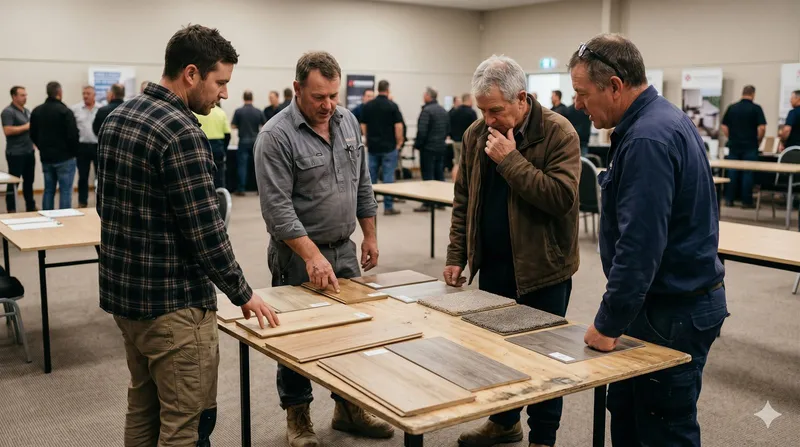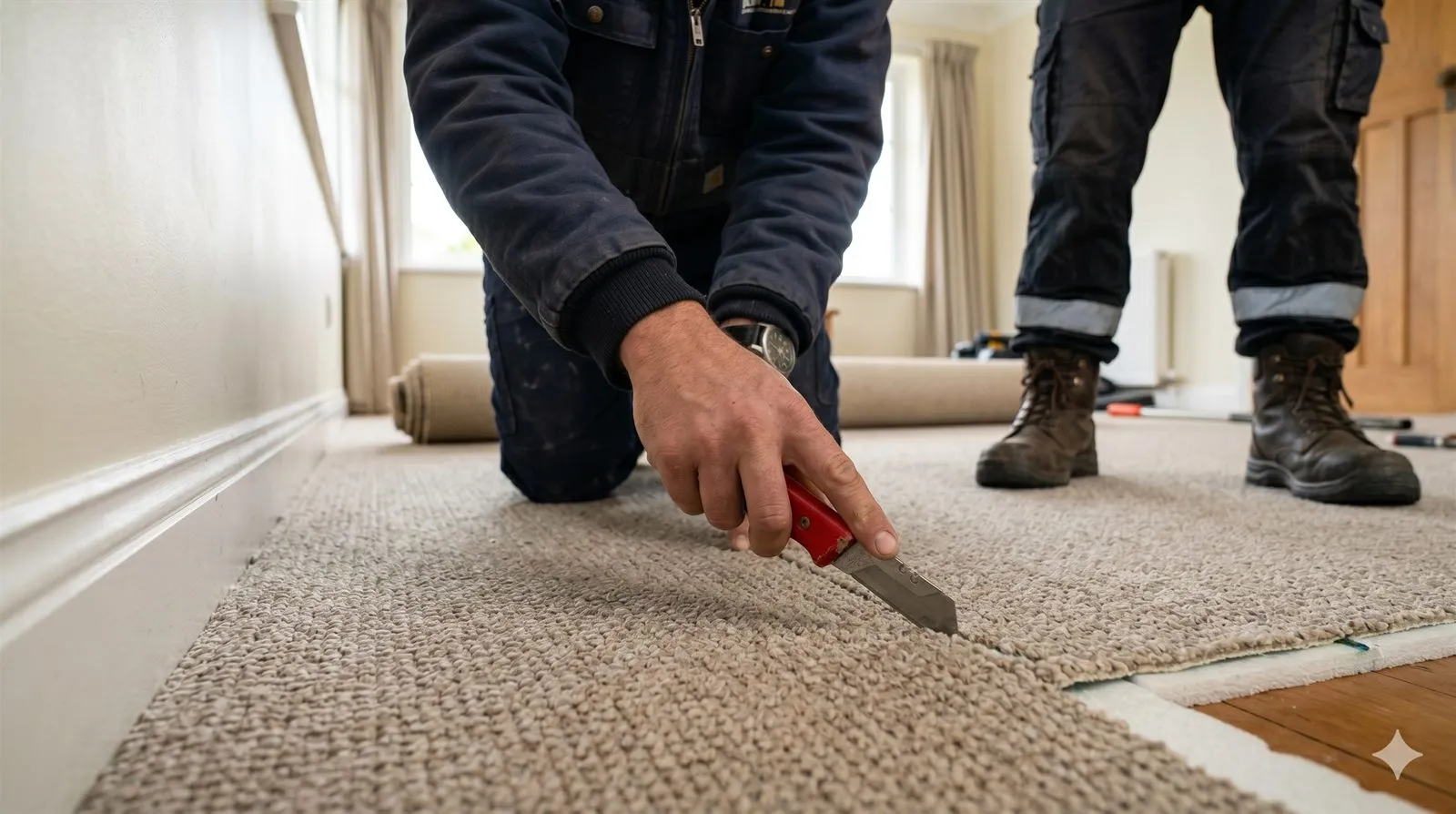
The BCITO (Building and Construction Industry Training Organisation) Level 4 Flooring Installation qualification is the formal training pathway for New Zealand carpet and resilient flooring installers. It’s not legally required to lay flooring in NZ — but it’s the credential that signals real training, opens up better-paying retailer relationships, and is increasingly expected by FloorNZ-aligned employers.
This piece is the practical guide for anyone considering the qualification, currently working through it, or hiring someone who claims to have it.
Quick facts
- Award: New Zealand Certificate in Flooring Installation (Level 4)
- Provider: BCITO Ltd — an industry-owned Private Training Establishment from 1 January 2026 (previously delivered through Te Pūkenga)
- Strands available: Bonded Carpet, Conventional Carpet, Commercial Resilient Flooring, Residential Resilient Flooring
- Typical duration: 16 months for one strand; up to 44 months for all four strands
- Cost to apprentice: Generally free or subsidised (employer pays training fees, often Government-subsidised)
- Format: Work-based training with assessments, not classroom-led
A flooring apprentice typically picks one strand and qualifies in that, with the option to add additional strands later through extension training.
What’s covered — and what isn’t
The Level 4 Flooring Installation qualification is soft-floor focused — carpet and resilient (vinyl, LVT, sheet vinyl, linoleum). Hard flooring sits under separate qualifications.
Foundations (all strands)
- Site safety, hazard identification, PPE
- Reading plans and specifications
- Measurement, calculation, and material estimation
- Subfloor preparation and assessment basics
- Moisture testing and acceptable readings
- Tool selection and maintenance
- Industry standards (Standards NZ, manufacturer specifications)
- Customer communication and on-site conduct
Bonded Carpet strand
- Direct-stick / glue-down carpet installation
- Adhesive selection and application
- Seam construction for bonded systems
- Stair installation in bonded contexts
- Trim and transitions
Conventional Carpet strand
- Underlay selection and laying
- Stretch-in installation (knee kickers, power stretchers)
- Carpet roll preparation and seaming
- Pattern matching and cuts at obstacles
- Stair installation
- Trim and transitions
Commercial Resilient strand (sheet vinyl, LVT, linoleum, safety vinyl)
- Subfloor preparation for resilient flooring (more demanding than carpet)
- Self-levelling compound application
- Adhesive selection and application
- Sheet vinyl installation including welds and coved skirtings
- Pattern alignment and cut work
- Compliance with commercial-grade specifications
Residential Resilient strand (LVP, hybrid SPC, sheet vinyl in homes)
- Subfloor preparation for residential resilient
- Plank/tile installation (click-lock and glue-down)
- Pattern alignment and cut work
- Skirting, scotia, and trim
- Domestic wet-area considerations
Hard flooring is separate
If you want to install timber, engineered timber, or laminate, that’s covered by a different qualification: New Zealand Certificate in Timber and Composite Flooring (Level 4), with strands in Bonded Installation and Fine Floor Sand and Finishes. Different programme, different duration, different unit standards.
There’s also a Flooring Surface Preparation (Level 4) qualification — focused on substrate evaluation, mechanical preparation, and moisture treatment, which supports both soft and hard flooring installs without covering installation itself.
For most working installers, “I’m BCITO Level 4 qualified” without specifying the strand can be vague. Asking which qualification, which strand, and when it was completed is reasonable.
How the apprenticeship actually works
BCITO Level 4 Flooring Installation is a work-based apprenticeship. You don’t go to a campus or polytech. Instead:
- You’re employed by a registered training employer (a flooring company, retailer, or independent installer set up with BCITO).
- Your employer signs you up with BCITO as an apprentice.
- You work alongside qualified installers, learning by doing.
- A BCITO assessor visits regularly to verify your work meets unit standard requirements.
- Each unit standard you complete contributes credits toward the full qualification.
- When you’ve accumulated all the required credits across the unit standards in your strand, you’re qualified.
The “work-based” part is crucial. You’re learning on real installations, in real homes and commercial sites, with real customer expectations. There’s no academic component — but there’s no faking the practical skill either.
The 2026 reform context
If you’ve been around the trade for a while you’ll know BCITO’s structure has changed. From 1 January 2026, BCITO transitioned out of Te Pūkenga (the centralised vocational education entity established in 2021) and became an independent industry-owned Private Training Establishment — BCITO Ltd. The change was approved by NZQA and the Tertiary Education Commission in late 2025.
Practically: the apprenticeship pathway, the qualifications, and the assessor structure haven’t disappeared. Apprentices already underway transitioned without losing progress. The shift returns BCITO to industry governance after roughly four years inside Te Pūkenga.
For new apprentices in 2026, this is mostly background — you sign up with BCITO Ltd directly through your employer.
Cost reality
For most apprentices, training fees are covered by the employer or by Government training subsidies. As an apprentice, you’d expect to pay little or nothing for the qualification itself.
What you pay in is time and earning capacity. Apprentice wages start lower than qualified installer wages. The NZ training minimum wage in 2026 is $19.16/hour (80% of the adult minimum, which is $23.95/hour from 1 April 2026).
Realistic NZ flooring apprentice wage progression in 2026:
- Year 1: $19–$24/hour (training minimum to slightly above adult minimum)
- Year 2: $24–$30/hour
- Year 3: $28–$36/hour
- Qualified (post-apprenticeship employee): $35–$50/hour; independent contractors charge more
These are typical ranges, not guaranteed rates — actual wages vary by employer, region, and the installer’s productivity. Auckland tends toward the upper end; smaller regional centres toward the lower.
The qualification pays back through earning capacity within 3–5 years of completion. Independent installers with the qualification can charge premium rates because retailers (especially FloorNZ-aligned chains) prefer qualified installers for brand-warranty work.
What it’s actually worth
Honestly, the qualification has three different values:
1. Skill value. The training is genuinely good. The work-based format means you learn from experienced installers across many real jobs. By the end, you can lay product competently to professional standards. This is the actual purpose.
2. Credentialing value. The qualification is a signal to retailers, employers, and increasingly homeowners. FloorNZ membership often expects Level 4 as a baseline for installer status. Carpet Court, Flooring Xtra, and Harrisons all prefer Level 4 installers for brand-warranty installations.
3. Trade respect value. Within the NZ flooring trade, having BCITO Level 4 means you’ve put in the work. Older installers without the qualification often respect those who’ve done it (even though they themselves may be just as skilled or more so — they predate the formal pathway).
What it’s not:
- A legal requirement to install flooring in NZ
- A guarantee of business success (plenty of qualified installers struggle on the business side)
- A substitute for years of experience (qualification + 6 months of experience ≠ 15 years of installing without it)
- A single qualification covering all flooring types — hard flooring is separate
Who should do it
The qualification makes sense if you’re:
- New to flooring and committed. If you want a career in carpet or resilient installation, the apprenticeship is the right entry point.
- Working as an installer’s assistant or labourer. If you’ve been working in flooring for a year or two without formal training, signing up as an apprentice with your current employer can formalise your experience.
- Self-employed without qualification, considering retailer work. If you want to take on more retailer-aligned jobs and get the better margins they pay, qualification is increasingly the gateway.
It probably doesn’t make sense if you’re:
- Already 15+ years experienced without it. The training won’t teach you much you don’t know, and you can document equivalent experience for FloorNZ membership through other pathways.
- Doing flooring as a side business alongside other work. The time investment is significant.
- Specialising in hard flooring (timber, parquetry, engineered) — you want the Timber and Composite Flooring qualification, not Flooring Installation.
How to start
If you’re an aspiring apprentice:
- Find a registered training employer. BCITO maintains a list. Your local FloorNZ chapter can also connect you. Many independent installers are registered to take on apprentices.
- Have the conversation about apprenticeship structure before agreeing to work for them. What hours, what wage progression, what assessment frequency.
- Sign up with BCITO directly through your employer’s existing process. They’ll have done it before.
- Get a clear understanding of which strand you’re starting with. Bonded vs Conventional Carpet, or Commercial vs Residential Resilient. You can add strands later but the first one is your foundation.
If you’re an existing installer wanting to formalise:
- Talk to your current employer about retroactive registration. If they’re willing to put you through, you can typically use existing experience to fast-track some unit standards.
- If self-employed, check BCITO’s current pathway for existing-skill workers — there are options for documenting experience, though they take administrative effort.
- Be realistic about time commitment. Even with experience, you’ll need to demonstrate work to an assessor and document your learning.
What the qualification doesn’t teach you
A few things Level 4 doesn’t cover that experienced installers know matter:
- Business management. Pricing, quoting, invoicing, accounting, GST, IRD obligations, insurance. The qualification is technical, not commercial.
- Customer dynamics. Difficult customers, payment disputes, scope creep, complaint handling. Learned only through experience.
- Niche specialisations. Parquetry, herringbone, hand-finished timber, restoration of period flooring. These require post-qualification training or apprentice-to-master mentorship — and most are hard-flooring not soft-flooring anyway.
- Sales skills. Some installers do their own sales (estimating, quoting, customer-facing work); others stick to installation only. Sales is its own skill.
For coverage of the business side, see our piece on pricing your flooring jobs.
Alternative training pathway: Allied Trades Institute
BCITO isn’t the only NZQA-approved provider of flooring qualifications. Allied Trades Institute (ATI) is a Private Training Establishment owned by FloorNZ that delivers nationally-recognised flooring qualifications, often through FloorNZ member retailers and installers.
For installers already engaged with FloorNZ, ATI is sometimes the more natural pathway. The qualification awarded is comparable; the delivery model and employer relationships differ. Worth talking to FloorNZ before defaulting to BCITO.
What FloorNZ thinks of it
FloorNZ generally treats Level 4 Flooring Installation as a baseline qualification expected of a working flooring installer. Their member-installer status often references it.
If you’re considering FloorNZ membership eventually (worth it for many independent installers — see our FloorNZ membership guide for the full breakdown), Level 4 makes the membership conversation easier.
Where to go next
Useful resources:
- BCITO main site: bcito.org.nz — current programme details, fees, registration
- BCITO Flooring Installation Level 4 page: bcito.org.nz/find-a-trade/flooring/flooring-installation-level-4
- FloorNZ: floornz.org.nz — industry body
- NZQA framework — for credit details on each qualification
We’ll be publishing more content for installers — including pricing guidance, business management, and regulatory updates. Subscribe at underfoot.co.nz/newsletter to get those when they publish.
If you’ve been through the qualification and have specific feedback (what was useful, what was missing, what you’d tell someone considering it), email us at hello@underfoot.co.nz. Real installer experience makes our content sharper.